

On April 25, the 18th Republican Subject Olympiad in the field of Law was held at the Caspian University, bringing together the strongest students fro Read more
Quotation gallery
They know enough who know how to learn.
Henry Adams
Faculty News
Пожароопасный сезон в лесах СКО в самом разгаре. Правила обращения с огнем и любовь к природе – первоосновы воспитания наших маленьких сограждан. В ра Read more
On April 17, 2026, as part of the Week of Science, the role-playing game «Court in a Criminal Case» was held. The event was held as an open criminal t Read more
On April 17, 2026, a solemn ceremony was held at Kozybaev University to award personalized scholarships dedicated to the legacy of Alexander Sergeyevi Read more
On April 16, 2026, at the Faculty of History, Economics, and Law, a solemn ceremony was held to equip the certified 1C-Accounting center with modern c Read more
On April 10, 2026, the Faculty of History, Economics, and Law hosted a session titled «Legal and Socio-Economic Aspects of Society's Development in th Read more
Гранты Read more
The M. Kozybayev North Kazakhstan University hosted the International Scientific and Practical Conference «Kozybayev Readings 2026», dedicated to the Read more
On April 8, 2026, the educational programs developed by the Academy of the International Financial Center «Astana» were officially transferred to the Read more
7 апреля 2026 года медицинский факультет НАО «Северо-Казахстанский университет им.М. Козыбаева» в рамках празднования Международного дня здоровья о Read more
Seed production of non-traditional forage crops
Priority area: Sustainable development of the agro-industrial complex and safety of agricultural products
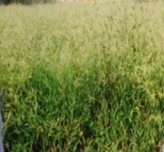
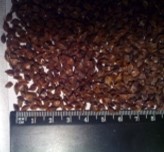
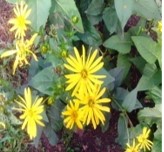
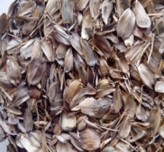
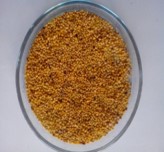
Project manager: Malitskaya N.V., Candidate of Agricultural Sciences
Performers of the project: students of 3, 4 courses of the specialty "Agronomy".
Terms of execution: 2018-2020
Amount of financing: 10,000,000 tenge.
Project goal: Seed production of non-traditional forage crops.
Expected results: Production of seeds of non-traditional fodder crops, payback of technology, organization of haymaking, where both feed and seeds will be produced.
Description of the project: Non-traditional (less widespread) fodder crops are intended for the production of fortified (vitamin-herbal flour), succulent fodder (silage, haylage). The feed is nutritionally balanced, in this respect it is not inferior to cereals and legumes.
In the conditions of Northern Kazakhstan, such unconventional (uncommon) forage crops as the Transbaikalian mountaineer, eastern sverbiga, astragalus chickpea, sylphia pierced-leaved, belonging to different botanical families, respectively, Buckwheat, Cruciferous, Leguminous, Compositae, united in the Multicolor group, have proven themselves.
We propose to use the joint production of forage and seeds in the haymaking system. It is easier to propagate these crops by seed than vegetative. These crops are not widespread in production due to the lack of primary seed production.
It is necessary to carefully prepare the soil mainly by agrotechnical methods, prepare seed material (calibration, scarification for chickpea astragalus), sow seeds (calculation of the seeding rate taking into account the insurance fund), remove seeds (selection of the seed ripening phase), earn extra seeds (moisture, purity), control the seeds during storage (air humidity, air temperature, atmospheric pressure). Long-term non-traditional fodder crops from the second year and for 7-10 years can be used for fodder purposes and for seeds.
Seed production quickly pays for itself within a few years after the seed is sold. the cost of seeds of non-traditional forage crops is high -1000 -1500 tenge/kg, in comparison with non-traditional 500-900 tenge/kg.
The average yield of seeds for the Transbaikalian mountaineer will be 5 centners/ha, the eastern sverbig - 20 centners/ha, the sylphia with pierced leaves -2 centners/ha, the chickpea astragalus -0.5 centners/ha.
Project objective: cultivation, harvesting of seeds from the second year of crop life.